Evaluating Log Book Templates for KDP Publishing
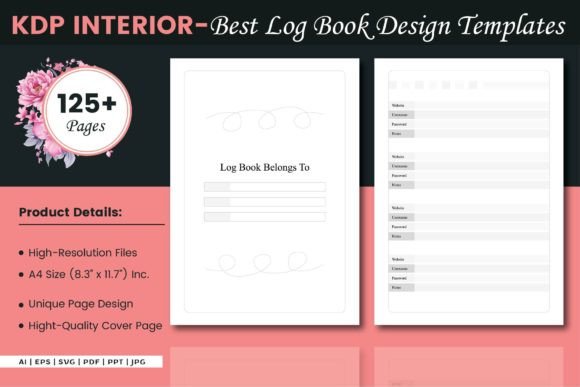
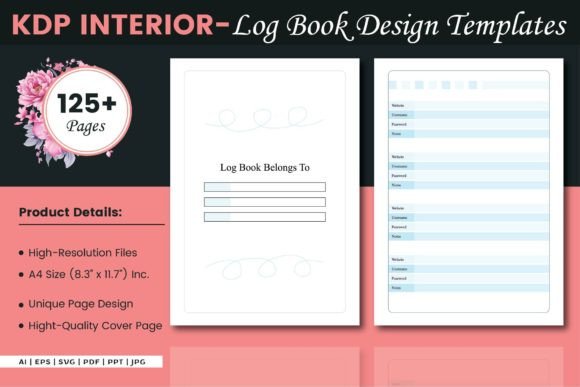
Self-publishers and low-content book creators constantly search for efficient ways to bring fresh interiors to market. The Log Book template collection offers a ready-made solution for anyone aiming to publish functional, cleanly designed log books on Amazon KDP. Rather than building pages from scratch, this download provides 100 distinct templates sized for A4 (8.3″ x 11.7″), each spanning 125 pages with no bleed requirements. On the surface, that promise of speed and variety can make a practical difference in a crowded niche. A closer look at what’s actually included, how the files perform in real workflows, and where the product fits into a publisher’s toolkit reveals both useful strengths and a few sensible precautions.
What Actually Arrives in the Download
The package is built around convenience and format flexibility. You receive the 100 log book interiors in six file types: AI, EPS, SVG, PDF, PPT, and JPG. The vector source files (AI, EPS, SVG) mean every line, table, and header can be adjusted without losing sharpness. The PDF interior is already production-ready for direct upload to KDP or for sending to a commercial printer. A 125-page A4 interior gives a mature product feel without stretching page counts artificially. That page count also lands comfortably in Amazon’s printing sweet spot, where binding and pricing stay predictable. An extra cover page file rounds out the kit, acknowledging that even interior-focused creators often want a matching cover start point.
What matters here isn’t the presence of multiple formats alone—it’s how usable they are. The high-resolution interiors maintain crisp lines when printed, which is non-negotiable for any log book that users will write in frequently. Because the PDF is set up without bleed, those new to interiors avoid one of the most common setup errors. The PPT version opens an unexpected door for quick tweaks in an environment many freelance designers already know. This multi-format approach recognizes that not every KDP creator works in Adobe Illustrator; some prefer Photoshop, Canva workflows, or even direct PDF editing.
Design Consistency and Practical Use Cases
Log books serve a wide audience—vehicle fleet managers, equipment operators, field technicians, daily journal keepers, and small business owners tracking maintenance schedules. The 100 templates in the Log Book bundle don’t cater to a single vertical. Instead, they provide a spread of clean, minimal layouts: column-driven grids, simple lined tables, date-tracker formats, and blank header styles. That range allows you to pick a core look, customize it, and release variations for multiple niches without repeating the same creative labor. If you plan to build a series of low-content books around vehicle logs, safety inspection sheets, or time-tracking records, having a master set of editable interiors cuts down repetitive alignment work considerably.
Because all designs exist in vector form, you can adjust line weights, font choices, and spacing without degradation. That’s especially useful when you want to match a specific brand feel across multiple titles. A publisher who launches a “Pilot Log Book” and a “Fleet Maintenance Log” can start from two different templates in this bundle, tweak the header typography, and publish faster than a competitor building each interior from a blank page. The lack of bleed also simplifies layout: everything stays within the safe bounds of an A4 sheet, so no image or text gets clipped during trimming.
Who Benefits Most from This Resource
The obvious audience is KDP publishers and low-content book creators. However, the Log Book templates also serve small business owners who want to produce branded internal forms quickly. A workshop with a dozen vehicles can use the editable AI file to add its logo, print and bind the result as a company-specific logbook. Teachers and educators developing custom record-keeping templates for classrooms will find the clean formats adaptable. Freelance graphic designers who occasionally need to deliver a log book interior can keep this collection as a licensed resource to speed up client work.
Entrepreneurs testing the KDP waters might appreciate the ready-to-upload PDFs most, because they eliminate the technical learning curve. You can select a template, optionally make a few text changes in the PPT or AI file, export a fresh PDF, and upload. The included extra cover page reduces the need to source a matching cover separately, although some will still want a custom cover design.
People running multiple pen-name brands or publishing imprints will likely reuse these interiors many times over. Since you’re not paying per template per book, the value grows with each published title. Even a modest catalog of ten different log books repurposed from this bundle can represent a meaningful content library without ongoing interior design costs.
Editable Source Files and Customization Depth
Having an editable source file matters because no stock template fits every brand voice. The AI and EPS files open in Adobe Illustrator, where you can alter colors, change fonts to something more readable in print, or rearrange column widths based on actual user feedback. The SVG format works well for those using Inkscape, Affinity Designer, or other vector tools. The PPT version is a pragmatic choice: PowerPoint doesn’t need a design subscription, and many users find it simpler for text-based edits than a full vector program. While the level of polish achievable in PPT differs from Illustrator, for basic label changes and minor layout shifts it performs acceptably.
One realistic observation: the templates are clean but generic by design. If your target audience expects a highly specialized log layout—say, a trucker’s log with DOT-specific fields or a detailed industrial inspection form—you will need to add those fields manually. The strength here is the structural foundation, not turnkey niche compliance. That said, the editable nature means you can iterate based on customer reviews or market trends without starting over.
Print Quality and KDP Upload Experience
High-resolution interiors are mentioned, and in practice that translates to 300 DPI output that holds detail even in fine rules and small header text. When printed by Amazon KDP, the interior pages appear crisp without visible artifacting. The A4 size (8.3″ x 11.7″) is standard and widely supported, though you should check current KDP trim size guidelines. No-bleed files stream the upload process; you won’t encounter the “bleed exceeds trim” errors that slow down new publishers. The 125-page range provides a good physical feel—enough heft to feel substantial—without crossing into high printing costs that might push you out of a competitive price bracket.
Files like JPGs serve as preview or placeholder assets, though they’re less practical for direct KDP upload for the full interior. Most publishers will lean on the PDF for submission and the AI/EPS versions for customization. Having multiple rendering formats ensures you aren’t locked into a single software ecosystem, which improves long-term usability.
Potential Limitations and Sensible Precautions
No collection of 100 templates can be perfectly unique in every layout. Inevitably, some designs will overlap in utility, featuring similar column counts or slight rearrangements. That’s not a flaw; it’s a byproduct of offering choice. A savvy publisher will curate 10–15 best-fit templates rather than trying to publish all 100. The rest remain available as future starting points or seasonal refreshes.
Another consideration is that the cover page inclusion, while helpful, is a single extra file. It may not match your brand style exactly, and serious publishers selling multiple books will likely invest in a separate, custom cover design or at minimum modify the provided cover heavily. Treat the cover as a convenient placeholder or base, not a final product wrapper.
Because the templates are A4 size with no bleed, they’re optimized for that dimension. If your market prefers US Letter (8.5″ x 11″) or a slimmer 6″ x 9″ format, scaling and proportion adjustments will be necessary. The SVG and EPS files allow resizing, but you’ll need to check margins and re-export carefully to avoid unexpected cropping. This isn’t a dealbreaker, but it’s a step worth budgeting time for.
Long-Term Value for Repeat Users
From a resource efficiency standpoint, the Log Book template bundle can function as a reusable interior library. A single purchase gives you perpetual licensing for KDP books, internal business documents, or client projects. Over the course of a year, using even ten templates to launch separate titles can amortize the initial cost effectively. The inclusion of vector files also future-proofs the investment: as your design skills or software change, you can still access and edit the source materials.
Moreover, the low-content book market rewards publishers who can pivot quickly. When a new log book trend emerges—like sustainability trackers, EV charging logs, or home office time logs—you can repurpose a clean template, add a tailored header, and have a product ready in a fraction of the time competitors need. Time-to-market advantage often outweighs the cost of the template bundle itself.
Practical Recommendations Before You Upload
If you decide to use the Log Book interiors, start by opening the PDF or AI file for your chosen template and doing a thorough sanity check. Verify all tables align correctly, page numbers are consistent, and fonts embed properly when exported. Even a high-quality source file can introduce font substitution issues across operating systems. Run a small test print using a local printer or Amazon’s proof copy service to confirm the final output meets your expectations before listing publicly.
Consider adding subtle customization that makes each title feel targeted. Small changes like swapping “Date” for “Service Date” or adding a maintenance checklist can significantly improve perceived value for the buyer. The editable formats make these changes trivial, and they can lift a product from a generic log book to something that feels purpose-built for, say, HVAC technicians or drone operators.
Verifying Fit for Your Workflow and Audience
The bundle excels when your primary goal is rapid interior creation without compromising on clean, professional layout. If you’re a solo KDP publisher building a catalog of related log books, a freelancer juggling multiple client template requests, or a small business needing reusable paper-based logs, the flexibility and format variety outweigh most shortcomings. For extremely niche or regulation-heavy logs, you’ll still need domain research and some design adaptation, but you’ll be adapting a reliable skeleton rather than starting from zero.
The real test of any interior template is how well it prints and how effortlessly it moves through the publishing pipeline. On those counts, the ready-to-upload PDF, vector editability, and no-bleed A4 configuration deliver what a working publisher needs. The inclusion of 100 designs may feel like more than most need, yet it grants the ability to test multiple styles and find what resonates with buyers—something that can only improve your market sense over time.
When selecting a template suite like this, it’s wise to focus on what you actually need: a trustworthy starting point that cuts production time and lets you focus on niche selection, keywords, and marketing. In that context, the Log Book template kit functions as a practical accelerator, not a magic solution. It quietly does the heavy design lifting so you can concentrate on bringing helpful log books to people who use them every day—fleet managers, teachers, field workers, or anyone tracking data on paper.
Ultimately, your satisfaction will depend on how well you match templates to market demand and how attentively you refine the interiors before publishing. With a thoughtful approach, these log book interiors can become a dependable part of a productive, low-content publishing workflow.