Unlocking the Potential of Futoshiki Puzzles for Your KDP Publishing Business
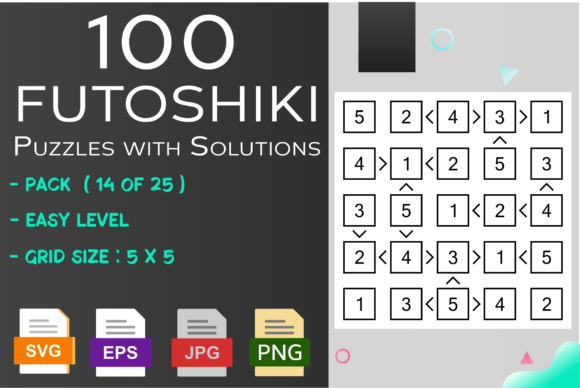
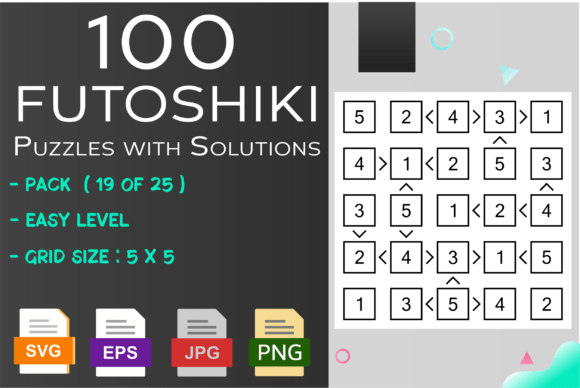
Puzzle books consistently rank among the top-selling low-content categories on Amazon KDP. If you’re looking to expand your catalog with something that feels fresh yet timeless, the 100 Futoshiki Puzzles Easy 23 of 25 collection is a resource worth paying close attention to. This particular volume is part of a broader suite of engaging Futoshiki puzzles crafted to help publishers create compelling brain-teasing content without starting from scratch. With 100 meticulously designed 5x5 grids, all set at an easy difficulty level, you receive a ready-to-use asset that can transform how you approach puzzle book interiors.
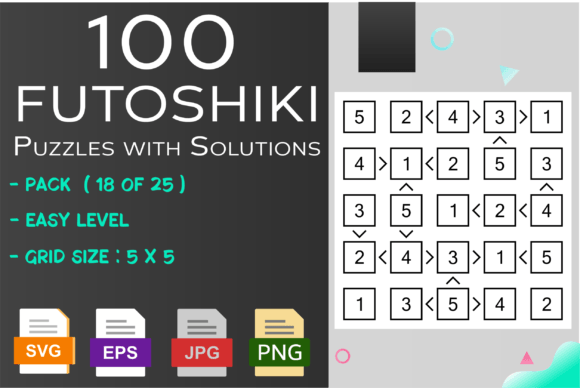
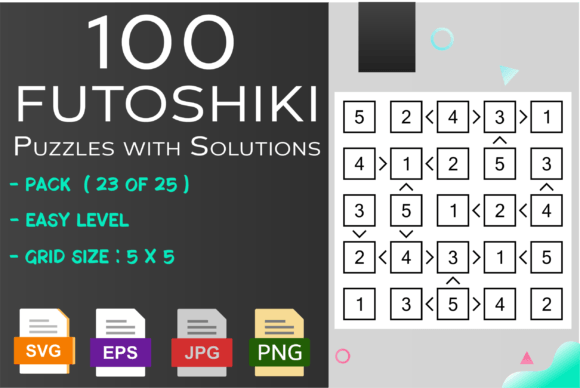
Futoshiki, sometimes called “inequality puzzles,” is a logic game that combines the spatial reasoning of Sudoku with the relational constraints of greater-than and less-than symbols. A standard 5x5 grid must be filled with numbers 1 through 5 so that each row and column contains each digit exactly once, while respecting the inequality signs placed between some cells. The result is a deceptively simple puzzle that offers a satisfying mental workout. For your readers, it’s an instant hit — easy enough for beginners yet engaging enough to keep them turning pages.
Why Easy 5x5 Futoshiki Puzzles Hit the Marketing Sweet Spot
When curating puzzle books for a broad audience, difficulty balance is everything. Extremely hard puzzles can alienate casual solvers, while overly simplistic ones may bore experienced logic enthusiasts. The 100 Futoshiki Puzzles Easy 23 of 25 set occupies that perfect entry-level space. Every puzzle is built on a 5x5 grid, which naturally limits the solving time to a few minutes per puzzle. This pacing makes it ideal for coffee-break entertainment, commute activity, or gentle mental stimulation before bed.
From a KDP publisher’s perspective, easy puzzles attract a wider demographic. Adults looking for light brain training, seniors seeking cognitive maintenance, teens discovering logic games — they all respond well to accessible challenges. Plus, offering easy puzzles doesn’t mean sacrificing perceived value. When you bundle them with clear instructions and attractive formatting, the perceived depth of your book increases significantly.
Inside the Premium Futoshiki Puzzles Collection
Our collection isn’t just a random assortment of puzzles. It’s a thoughtfully structured pack that includes both the unsolved puzzles and their complete solutions. For the 100 Futoshiki Puzzles Easy 23 of 25 volume, that means you get 100 puzzle grids plus 100 answer keys, giving you the flexibility to decide how you want to present them. Some publishers prefer to place solutions immediately after each puzzle; others gather them in a dedicated answer section at the back. The choice is entirely yours, and the materials accommodate both layouts effortlessly.
Each puzzle comes in four versatile file formats: EPS, PNG, JPG, and SVG. This multi-format approach eliminates compatibility headaches. Here’s how these formats serve different creative needs:
- EPS (Encapsulated PostScript): Vector-based and infinitely scalable. Perfect for seamless integration into professional design software like Adobe Illustrator or Affinity Designer. If you’re creating a crisp, high-end paperback interior with custom typography, EPS files preserve every line and symbol perfectly at any size.
- SVG (Scalable Vector Graphics): Another vector format, ideal for modern web-based tools or print-on-demand platforms that accept SVG assets. Its small file size and clarity make it a favorite for digital adaptations — think PDF printables sold on Etsy alongside your KDP paperback.
- PNG (Portable Network Graphics): A raster format with lossless compression, delivering sharp, high-resolution images with transparent backgrounds. PNGs are fantastic for layering puzzle grids onto your book page designs without white backgrounds getting in the way.
- JPG (Joint Photographic Experts Group): Widely supported and universally compatible. While JPG doesn’t support transparency, its small file size makes it a reliable fallback for quick previews or for publishers who prefer a straightforward drag-and-drop workflow in mainstream word processors.
Having access to all four formats means you’re never locked into a single design pipeline. You can start with simple JPG placement in Microsoft Word to prototype your book, then switch to SVG for polished, print-ready interiors in Canva or InDesign. The collection is designed to grow with your skill set.
Seamless Integration into Your Modern KDP Workflow
Today’s top-performing KDP publishers rely on efficiency and repetitiveness that doesn’t feel repetitive. That’s where the 100 Futoshiki Puzzles Easy 23 of 25 volume shines. Instead of spending hours crafting puzzles manually or verifying solution accuracy, you can download, unzip, and begin assembling your book within minutes. The files are compact and easy to download, so even on slower connections, you won’t waste time.
The high-resolution graphics are calibrated for sharp printing at standard KDP trim sizes. Whether you choose 6x9 inches, 8.5x11 inches, or something in between, the puzzle grids maintain their crispness without pixelation. The inequality symbols (those tiny < and > signs) remain clearly legible, which is crucial for solver satisfaction. Nothing frustrates a puzzler more than ambiguous markings, and this collection eliminates that risk entirely.
Customization Freedom That Respects Your Creative Vision
Puzzle book creators often worry about pre-made assets boxing them into a generic design. The 100 Futoshiki Puzzles Easy 23 of 25 pack actively encourages customization. The vector files (EPS and SVG) can be easily recolored, resized, or incorporated into themed backgrounds. You might add a floral border for a relaxation-themed book, a geometric pattern for a brain-training series, or even embed the puzzles within a larger narrative adventure for kids. The transparent PNG grids slide cleanly over any background you design.
This flexibility extends to the puzzle arrangement itself. Because each puzzle is a separate file, you can reorder them, group them by column count, or intersperse them with other puzzle types. Many successful publishers create “variety puzzle books” by mixing Futoshiki with Sudoku, Kakuro, or word searches. Having a solid, reliable source of 100 puzzles lets you build a robust section within a larger volume without slowing down your production schedule.
Building a Cohesive Puzzle Book Series with Volume 23 of 25
The numbering “23 of 25” isn’t random. It’s a strategic asset for KDP publishers who understand the value of series branding. When you release puzzle books in a numbered sequence, you create a collectible mindset among buyers. A customer who enjoys 100 Futoshiki Puzzles Easy 23 of 25 is likely to seek out volumes 1 through 22, or eagerly anticipate volume 24. You can subtly hint at the series completeness in your product description, encouraging multi-book purchases.
Moreover, having 25 total volumes in the easy 5x5 category means you can curate a gradient of difficulty across the series, even while staying within the “easy” range. For instance, earlier volumes might have more given numbers or simpler inequality chains, while later volumes like 23 gradually introduce slightly more complex logic paths — still easy, but with a touch more deduction required. This progression retains solver engagement across multiple books, boosting your back-catalog sales.
Practical Considerations for Puzzle Book Production
Before hitting publish, there are a few technicalities worth reviewing. First, always test print your interiors on standard paper to verify ink-heavy designs don’t bleed through. The high-resolution graphics here are well-optimized for typical KDP print conditions, but if you add heavy background colors, adjust accordingly.
Secondly, consider adding a brief “How to Play” section at the beginning of your book. Even though Futoshiki is intuitive, newcomers appreciate a one-page guide. You can create this instructional page from scratch, but the clean puzzle graphics make it easy to drop in visual examples directly from the collection.
Third, think about interior layout. A common approach is to place one puzzle per page with generous margins, allowing solvers to write directly in the book. Alternatively, you can fit two puzzles per page for a more compact, travel-friendly edition. The transparent PNGs adapt cleanly to both styles.
Attracting the Right Audience with the Right Metadata
From an SEO standpoint, your KDP listing will benefit from terms that match exactly what puzzle seekers type into Amazon’s search bar. Phrases like “Futoshiki puzzles for adults,” “easy logic puzzles book,” “5x5 inequality puzzles,” and “printable Futoshiki” all align with the content you’re packaging. Because the 100 Futoshiki Puzzles Easy 23 of 25 product is laser-focused on a specific difficulty and grid size, your keyword targeting becomes effortless. Your book description can honestly state that every puzzle is easy and 5x5, satisfying precisely the intent behind those long-tail searches.
You can also cross-link volumes in your series within your Amazon author page or in the book’s front matter, driving organic traffic between titles. Over time, this interconnected ecosystem of puzzle books boosts your overall author rank and visibility.
Expanding Your Creative Output Beyond Just Paperbacks
Don’t limit yourself to print-only products. The SVG and PNG files open doors to digital extension products. You could extract a subset of puzzles to create a free lead magnet for your email list, a downloadable sampler on your website, or even an interactive PDF for tablet users. The transparent PNG grids are particularly handy for building app prototypes if you ever venture into digital puzzle apps. By starting with a reliable asset like 100 Futoshiki Puzzles Easy 23 of 25, you’re not just buying puzzles; you’re investing in a versatile content library that serves multiple revenue streams.
Publishers who stay ahead understand that blending traditional print with digital add-ons increases customer trust and lifetime value. A customer who downloads your free five-puzzle sampler today is far more likely to buy your full 100-puzzle paperback tomorrow.
Why Now Is the Perfect Time to Publish Futoshiki Books
Logic puzzles have seen a steady resurgence, driven partly by increased screen fatigue and a desire for off-screen mindfulness activities. Futoshiki, with its clean geometric appeal and straightforward rules, rides this wave beautifully. Unlike hyper-niche puzzles that require lengthy tutorials, Futoshiki can be explained in three sentences, making your book instantly accessible. The 100 Futoshiki Puzzles Easy 23 of 25 set positions you right at the intersection of rising demand and low competition — a sweet spot every KDP publisher dreams of.
Moreover, the collection’s formatting convenience lets you test the market with minimal risk. You can have a fully designed book ready for upload in a single afternoon, then gauge customer interest before committing to additional volumes. Given the perpetual popularity of puzzle books, the likelihood of gathering positive reviews quickly is high, which then fuels the algorithm to promote your title even further.
Investing in a pre-built puzzle collection like this isn’t about cutting corners; it’s about channeling your creativity where it matters most — on marketing, branding, and connecting with your audience. The heavy lifting of puzzle creation and solution verification is done, leaving you free to build the beautiful, cohesive book that keeps solvers returning. Grab your copy now and start crafting exceptional puzzle books that captivate and challenge your audience.