Ovulation Test Strips Log KDP Interior Mistakes That Can Derail Your Self-Publishing Success
A beautifully structured ovulation test strips log can become a reliable income stream on Amazon. Women tracking their cycles, trying to conceive, or monitoring hormonal health rely on simple, repeatable record-keeping. That’s exactly why a no-content or low-content book like this works. When someone offers a ready-to-upload Ovulation Test Strips Log KDP Interior with editable source files and tested PDFs, it sounds like a no-brainer. Yet, many first-time publishers and even experienced creators walk right into avoidable missteps that tank book quality, invite bad reviews, or even get their listing blocked.
I’ve watched too many well-intentioned people buy a perfectly good interior and then make it nearly unusable for their customers. The flaws usually aren’t in the product—they’re in how we handle it. Once you understand what can go wrong, you can turn that editable PPTX file, those three PDF variations, and the no-bleed layout into a product that truly helps someone while strengthening your KDP catalog. Let’s walk through the common lapses, why they hurt, and how to make every project land cleanly.
What Your Ovulation Test Strips Log Interior Actually Needs to Deliver
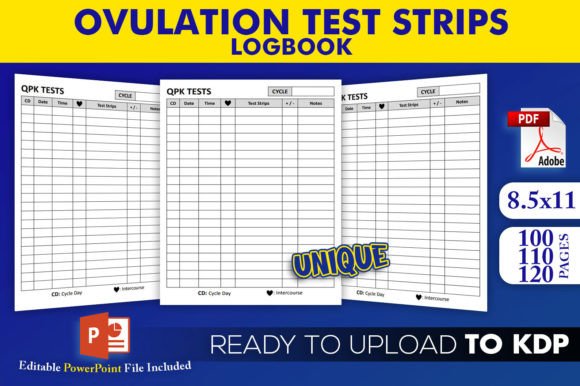
A buyer who purchases your log expects crisp, easy-to-follow pages. They might place the book on their bathroom counter, scribble down the time of their LH surge test, compare line darkness, or note cervical fluid changes. If the paper feels cluttered, the dates are jumbled, or the page numbers vanish after page 99, their trust in you evaporates. Your KDP interior forms the backbone of that experience. The version you’re considering includes three distinct PDF lengths—100, 110, and 120 pages—all set to a trim size of 8.5×11 inches with no bleed. That’s a thoughtful starting point because not every cycle length fits a standard 120-day tracker. Some women prefer a shorter dedicated log, and offering a concise option can actually boost conversions.
The interior also arrives as an editable PowerPoint file. That source file is your secret weapon for branding and personalization. However, if you treat it as just another static graphic and skip verification steps, you’ll invite problems that a simple proofing process could prevent.
Trusting the Preview Instead of Testing the Real Files
The biggest misconception I see is the assumption that because a product description says “files have been tested on KDP,” you can upload and hit publish immediately. Yes, the creator already ran a print test and the interior passed Amazon’s automated checks. That saves you from major formatting rejection—but it doesn’t save you from your own oversights. Maybe you accidentally renamed the PDF and uploaded the wrong page count. Perhaps you didn’t open the file at all and missed a stray blank page at the end that now throws off the “Look Inside” feature. These tiny slips destroy perceived quality. A buyer who sees a 100-page log with a blank ending will wonder if they received a defective copy.
Better approach: Before you even think about listing your book, download all the provided PDFs—100, 110, and 120 pages—and flip through each one page by page on a large screen. Print a few physical pages at home, even if it’s just in black and white on regular paper. You’ll immediately notice if margins feel too cramped for handwriting or if the date fields sit too close to the binding edge. Since the trim size is 8.5×11, no bleed, the content should sit comfortably within the safe zone. If something looks off, open the PPTX source file and tweak the internal margins or font sizes. That kind of attention separates a forgettable log from a trusted fertility tracker companion.
Leaving the Editable Source File Untouched
An editable source file isn’t just a bonus—it’s your insurance against mediocrity. Many publishers never open it. They think, “I’ll just sell the generic version; it’s fast money.” But a generic interior that looks identical to a dozen other ovulation tracking logs on Amazon struggles to stand out. Worse, you may inadvertently keep placeholder text that sounds robotic or lacks warmth. For instance, a header that says “Ovulation Test Log” without any inviting subtitle can feel clinical. Where is the gentle encouragement for someone who’s been trying for months? A small customization, like adding a brief note at the bottom of each page that says “Track your journey with patience and care” can elevate emotional connection and lead to glowing reviews.
Be careful, though. When you edit the PPTX, make sure you consistently update all three page-count versions. I’ve seen creators beautifully redesign the 120-page layout but forget that the 100-page file still has outdated branding. A customer who buys the shorter option receives an inconsistent interior. That’s a quick route to a return request. Always keep the design uniform across every variant.
Misunderstanding How ‘No Bleed’ Affects Your Final Print
A no-bleed interior means the page content cannot extend to the very edge of the paper. Amazon will reject files that have objects touching the trim line if they aren’t set up with bleed. This Ovulation Test Strips Log interior already accounts for that, but when you start editing the PPTX, it’s easy to push a decorative header or a border too far. If you place a subtle gray line close to the outer margin without realizing that Amazon’s trimming tolerance can shave off up to 0.125 inches from the edge, your printed book might arrive with a partially cut-off element. To the reader, that looks like a production failure, not a design choice.
How to avoid this: Within your editable PPTX, keep all essential graphics, text, and line art at least 0.5 inches away from the trim. Since the file is 8.5×11 inches, you have a generous canvas. Don’t try to mimic a magazine-style full-bleed look because the print-on-demand process won’t support it without bleed settings, and the interior was deliberately built without bleed to simplify your workflow. Appreciate that safety margin. It ensures that every LH test entry field, every symptom checklist, and every cycle summary box prints exactly as intended.
Picking the Wrong Page Count for Your Target Audience
Three PDFs—100, 110, and 120 pages—give you flexibility, but flexibility without strategy leads to confusion. I’ve seen publishers offer all three as separate books when they could use one as a paperback and another as a quick-print digital companion. Others list a 120-page log but don’t mention how many cycles the book covers. A woman tracking ovulation test strips twice a day over several months might need far more space than a 100-page book provides. If she runs out of pages before a new cycle begins, she’ll leave negative feedback.
Consider this realistic example: Suppose someone testing daily and logging extensive notes finishes a 100-page book in just two cycles. She expected a six-month tracker. The mismatch leaves her frustrated. To prevent this, estimate how many days of logging each page count offers. If your log dedicates one page per day, 100 pages may last roughly three months. Communicate clearly in your description and reinforce it with a simple “This journal covers up to 90 days of testing” note on the cover or inside page. Also, before you finalize your listing, decide which page count best aligns with your target reader. A fertility-focused brand might choose the 120-page version for depth; a casual basal body temperature and ovulation test strip combination log might only need 100 pages. You can always use the PowerPoint file to adjust the layout and add more daily entries per page if you want to extend tracking.
Overlooking Print Resolution and Blurry Output
High-resolution interiors aren’t just a buzzword. When you export from the PPTX or use the provided PDF directly, the text and any embedded graphics must remain sharp. Jaggies, pixelated lines, or fuzzy table borders destroy the professional feel. Some people mistakenly compress the PDF before upload to reduce file size, not realizing that KDP’s print process thrives on crisp 300 DPI elements. If you’ve added your own images—say a small ovary diagram or a circle chart for mucus observation—verify that they don’t drop below the resolution threshold. A grainy visual on a page will make readers question the accuracy of the entire log, even if it’s purely aesthetic. Print one page at 100% scale and hold it at arm’s length. Does it feel like a premium guided journal or a photocopied worksheet? That perception drives repeat purchases and organic word-of-mouth.
What to Check Before You Click ‘Publish’ or Order a Proof Copy
When you’re holding a ready-made Ovulation Test Strips Log KDP Interior bundle, run through a simple checklist before uploading anything. First, open each PDF and confirm that the page count matches your intended version—no random extra pages or missing last pages. Second, look at the page numbers. Do they run consecutively and remain in the same position? A misaligned page number can creep in if the PPTX master slides were altered. Third, ensure any trackable information, like placeholder website links or outdated copyright text, has been replaced with your own. Finally, verify that the trim size 8.5×11 is correctly set in your KDP title details. If you accidentally select a different trim during book setup, Amazon’s system will flag a mismatch, delaying your launch.
Taking thirty minutes to do these checks transforms the interior from a generic template into a polished, customer-ready product. It also positions you as someone who genuinely cares about the lived experience of the person marking ovulation test strip results day after day. That emotional weight matters more than any quick keyword trick. Honor the reader’s trust by handling the technical side correctly from the start, and your KDP journey becomes far more rewarding—both creatively and financially.