The Power of a Homework Planner Template: From Student Success to KDP Publishing
In a world buzzing with digital notifications, calendar apps, and endless to-do lists, the simple act of writing down a task remains one of the most effective ways to get things done. Nowhere is this truth more evident than in education. A homework planner template is far more than a sheet of paper with rows and columns—it is a foundational tool for building discipline, reducing anxiety, and fostering long-term academic growth. Whether you are a parent helping a middle schooler stay on track, a college student juggling multiple syllabi, or a creative entrepreneur looking to publish a high-quality Homework Tracker Template – KDP Interior on Amazon, understanding the anatomy and value of these planners opens up a world of possibility.
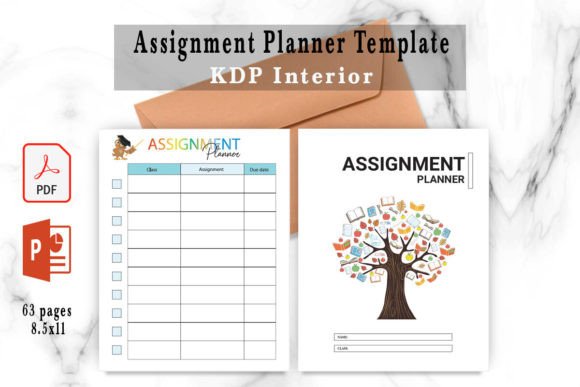
This article explores the journey of a homework planner from a simple organizational aid to a versatile, publishable interior design. We will unpack what makes these templates work, why they matter in today's fast-paced learning environments, and how a well-crafted PDF interior with features like class date, subject, assignment, due date, and completion checkboxes can serve both students and self-publishers alike.
Why Organization Starts on Paper
Before diving into the specifics of a homework tracker template, it is worth asking a fundamental question: why does paper still work so well in an age of apps? Research in cognitive psychology consistently shows that the physical act of writing engages multiple brain regions responsible for memory encoding, critical thinking, and prioritization. When a student hand-writes an assignment into a planner, that information is processed more deeply than if they simply typed it or took a screenshot.
Moreover, a dedicated homework planner removes the cognitive load of remembering every deadline and task. Instead of relying on scattered mental notes or fragmented digital reminders, the student has a single, unified view of their responsibilities. This clarity reduces the overwhelming feeling that often accompanies a heavy workload. The template becomes a trusted external brain—one that never runs out of battery and never distracts with a social media notification.
The Anatomy of an Effective Homework Planner Template
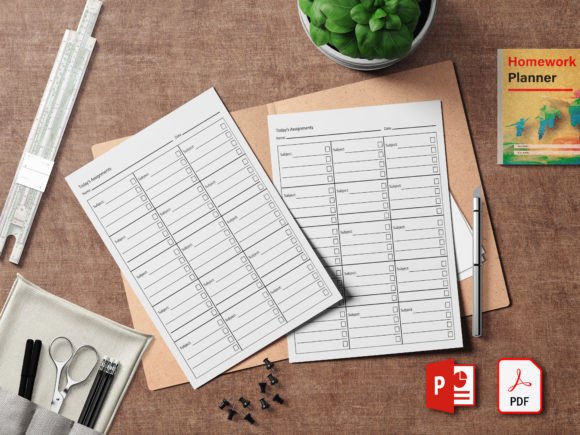
A thoughtfully designed homework planner is not just a blank grid. It guides the user through a logical sequence of information capture. The most effective templates, including those prepared as KDP interiors, include key fields that mirror how students actually think about their schoolwork.
Breaking Down the Essential Fields
- Class Date: This field anchors the assignment in time. Rather than a floating task, the student can see exactly when the homework was assigned or when the class took place, creating a chronological thread throughout the semester.
- Class Subject: Grouping assignments by subject—Math, History, Science, English—helps students compartmentalize and switch contexts more smoothly. It also makes it easier to spot patterns, such as which subjects consistently demand more out-of-class work.
- Assignment Homework: This is the core description field. A well-designed template provides enough space to write a meaningful description, not just a one-word label. “Read Chapter 5 and answer questions 1–10” is far more useful than “Reading.”
- Due Date: Separating the “assigned on” date from the “due by” date is a subtle but powerful distinction. It allows students to visualize the gap between when work begins and when it must be completed, encouraging them to start earlier on long-term projects.
- Check When Done: There is a deep psychological satisfaction in physically checking a box. This small act releases dopamine, reinforcing productive behavior. That checkbox is not just a design element—it is a mini reward system built into the page.
When all these fields work together on an A4-sized 8.5″ x 11″ page with no bleed, the layout feels clean and professional. The absence of bleed is particularly important for printing: the design stays fully visible and nothing is cut off at the edges. This practical consideration makes such templates ideal for both at-home printing and large-scale publishing.
The Shift from Single Use to Scalable Interiors
For many people, a homework planner is something they buy once for a school year. But there is a growing community of entrepreneurs, teachers, and designers who see these templates differently. They view them as products—specifically, as KDP (Kindle Direct Publishing) interiors that can be uploaded to Amazon and sold to a global audience.
The idea is simple but brilliant. Rather than creating a planner from scratch every year, a publisher can design a polished, 62-page PDF file, complete with a cover page, and make it available for others to purchase, download, and print. The description “100 Ready For Upload To Amazon KDP” refers to the fact that the interior design has been rigorously checked against Amazon’s printing specifications. It is formatted correctly, the margins are safe, and the file type is compatible. This readiness removes a massive barrier for first-time publishers who may be intimidated by the technical requirements of print-on-demand.
What Makes a KDP-Ready Interior Different?
A standard printable planner might look fine on a screen, but a KDP interior must meet exacting standards. The template is set to A4 dimensions—8.5 inches by 11 inches—which is the most common paperback trim size for notebooks and workbooks. Every page is designed without bleed, meaning the content stays within safe margins so nothing is accidentally trimmed during printing. This is not a design preference; it is a technical necessity for a professional-looking final product.
The package described also includes a PPT PowerPoint file. This is a valuable bonus for users who want to customize colors, fonts, or minor layout elements before finalizing their PDF. PowerPoint, often overlooked as a design tool, offers accessible editing capabilities that programs like Adobe InDesign do not—making the template more democratic and beginner-friendly. The inclusion of both a 62-page PDF and a separate cover file in PDF and JPG formats means the publisher can focus on creativity rather than technical setup.
Practical Applications Across Different Audiences
The homework planner template sits at a unique intersection of education, personal productivity, and small business. Its versatility is one reason the topic attracts such a wide readership.
For parents and students: The template is a lifeline. Instead of constant nagging—"Did you do your math homework? When is that science project due?"—the planner becomes a neutral, objective record. Parents can glance at the page and see a clear overview of what has been completed and what remains pending. This shifts the dynamic from confrontation to collaboration.
For teachers and tutors: Recommending or providing a standardized homework tracker helps students who struggle with executive function skills. Many neurodivergent learners, including those with ADHD, benefit enormously from the external structure that a consistent, visual planner provides. A teacher who incorporates these templates into their classroom routines is building a scaffold for independence.
For KDP sellers and designers: The template is a business asset. A 62-page interior with a professional cover can be listed on Amazon’s platform and sold as a physical book or a downloadable printable. Because the homework planner niche is evergreen—students will always have assignments—there is consistent demand. The key to standing out lies in the thoughtful arrangement of fields, the quality of the cover design, and the ease of use for the end customer.
Common Misunderstandings About Homework Planners
One misconception is that a homework planner is only for disorganized or struggling students. In reality, high achievers use them just as much, if not more. Organization is not a sign of weakness; it is a strategy for sustainable excellence. A student with a packed schedule of advanced classes, extracurriculars, and college applications cannot rely on memory alone. The planner becomes their command center.
Another misunderstanding is that digital tools have made paper planners obsolete. The two can coexist. Many students use a digital calendar for event-based reminders and a paper homework tracker for daily task-level planning. The physical act of checking off a completed assignment provides a tangible sense of progress that a screen rarely replicates. Some templates even bridge the gap: users can design their planner in PowerPoint, export it as a PDF, and use it on a tablet with a stylus, blending the benefits of both worlds.
Designing for the Modern Learner
The modern learner is busy, often overstimulated, and in need of clarity. A homework tracker template that features crisp typography, logical grouping of fields, and plenty of white space is not just aesthetically pleasing—it is cognitively supportive. When a student opens their planner and immediately understands where to write each piece of information, the friction of getting started dissolves.
The 62-page count is a deliberate choice. It provides enough pages to cover a full semester or term without becoming unwieldy. A planner that lasts 12–15 weeks is manageable, portable, and gives the student a psychological win: finishing a full planner feels like a meaningful accomplishment. It is also a sweet spot for KDP publishing, keeping the printing cost reasonable while offering customers a substantial product.
How This Fits into the Broader World of Self-Publishing and Education
The availability of ready-to-upload KDP interiors has democratized publishing. A decade ago, creating and distributing a physical homework planner required significant upfront investment in design, printing, and inventory. Today, an individual with a laptop and an understanding of what students and parents need can create a compelling product, upload it to Amazon, and reach customers worldwide—all without holding a single physical copy.
This shift matters because it means products can be created by people who genuinely understand the end user. A mother who designed a planner for her own children, a retired teacher who saw a gap in the market, a college student who created a template for themselves and realized others might want it—these are the voices now shaping the school supply landscape. The inclusion of a source file like a PPT PowerPoint further lowers the barrier, allowing for translation into different languages, adaptation for specific curricula, or rebranding under a unique identity.
Maximizing the Value of a Homework Planner Template
To get the most out of such a template—whether for personal use or commercial publishing—consider these practical tips:
- Consistency is key: A student should fill out the planner at the same time each day, such as right after each class or during a set evening routine. Habit formation removes the mental effort of deciding when to use the tool.
- Use the “check when done” box intentionally: Do not check it prematurely. Treat it as a mini-contract with yourself. Once that box is checked, the task is truly, completely finished.
- Review the week ahead: A quick Sunday evening scan of the upcoming week’s due dates can prevent nasty Monday-morning surprises. This proactive review turns the planner from a passive record into an active planning device.
- For publishers, test your prints: Before uploading a 62-page interior to KDP, order a proof copy. Check that the A4 dimensions look correct, that no content is lost in the gutter, and that the cover aligns properly. Amazon’s print preview tool is useful, but nothing replaces a physical copy in your hands.
Looking Ahead: The Enduring Appeal of Structured Simplicity
As artificial intelligence and automation continue to reshape education and work, the humble homework planner template stands as a reminder that foundational skills still matter. Learning to track responsibilities, estimate time, and follow through on commitments is not just about getting good grades—it is about building the self-regulation skills that underpin adult life.
Whether you are downloading a single PDF to print at home, customizing a PowerPoint file for your classroom, or building a passive-income stream through Amazon KDP, the core promise of a well-designed homework tracker remains the same: it brings order to chaos, one assignment at a time. The fact that 62 pages, an A4 layout, and five simple fields—Class Date, Class Subject, Assignment Homework, Due Date, Check When Done—can carry so much weight is a testament to the power of thoughtful design meeting real human need.
In a noisy world, the ability to focus on what matters, record it clearly, and complete it with confidence is a quiet superpower. And sometimes, that superpower fits neatly between the covers of a planner, ready to be written on, checked off, and carried forward into whatever comes next.