Escape the Digital Noise: How the Christmas Word Search Puzzle Book Graphic Offers Real Cognitive Benefits Without the Screen
Many people are searching for a simple, screen-free way to relax their eyes and challenge their minds during the festive season. The Christmas Word Search Puzzle Book Graphic seems like a straightforward choice—a themed puzzle book promising large-print, brain-friendly entertainment. But the difference between a forgettable purchase and a genuinely useful tool often comes down to small details that are easy to overlook. If you’ve ever bought a word search book and felt it was either too childish, too cramped, or too repetitive to hold your attention, you’ve already met the most common mistake: assuming all puzzle books are created equal.
This isn’t just about circling words. The right puzzle book acts like a gym for your working memory, pattern recognition, and focus, all while giving you a much-needed break from glowing screens. The Christmas Word Search Puzzle Book Graphic is designed specifically for adults who want that sharp, satisfying mental workout without wasting time on poorly laid-out pages. Let’s walk through the subtle errors people make when choosing or using a puzzle book like this, and how to get far more value from every puzzle you solve.
Overlooking Puzzle Diversity and Word Direction Complexity
One of the biggest blind spots is underestimating the impact of word direction variety. Many casual solvers expect words to run only horizontally or vertically, maybe with a few simple diagonals. The moment they hit a backward diagonal or a hidden vertical-bottom-to-top entry, frustration spikes—not because the puzzle is too hard, but because they weren’t prepared for it. The Christmas Word Search Puzzle Book Graphic includes words in all standard directions: forward, downward, diagonal, and backward in every orientation. That’s not a gimmick; it’s the secret sauce for keeping an adult brain fully engaged.
If you approach these puzzles with a half-hearted scan from left to right, you’ll regularly hit a wall. The mistake is sticking to a narrow search pattern. Instead, actively tell yourself to rotate your visual scan just like you’d rotate a physical object. Start from the bottom right and sweep upward; scan diagonally from corner to corner. Because words can appear backward, you’re training your brain to process information in reverse, which is a powerful cognitive exercise. This also prevents that deflating feeling of “I can’t find anything” that causes many people to put the book down. By acknowledging the full directional complexity upfront, each 18x16 grid becomes a satisfying challenge rather than a source of irritation.
Misjudging Print Layout and Usability for All Ages
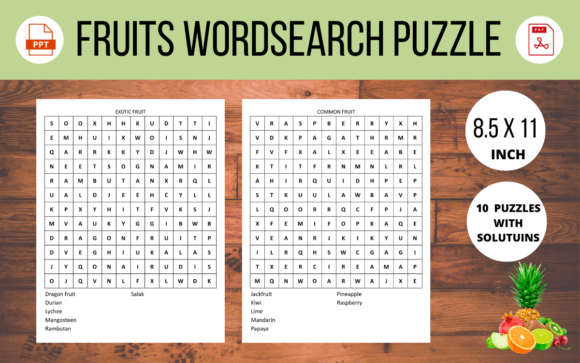
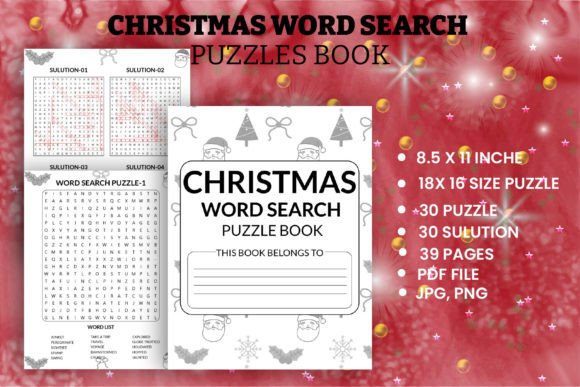
A surprisingly common and costly mistake is failing to check the physical layout before buying. You might see “large print” in a description and assume it’s comfortable for you, but what does “large” actually mean in the context of a word search grid? If the puzzle size is cramped into a tiny corner of the page, or if the letters bleed together due to poor print quality, the experience degrades quickly. The Christmas Word Search Puzzle Book Graphic addresses this head-on with its 8.5 x 11 inch trim size and an 18x16 puzzle layout that feels spacious without being sparse. The “puzzle per page” rule means you’re never fighting with a puzzle on the back of a page, and the large print is genuinely easy on the eyes after a long day looking at monitors.
Another overlooked aspect is the solution section. Many puzzle books treat answers as an afterthought, cramming four tiny solution grids onto one page, or using fonts so small you need a magnifying glass to check a word. This book dedicates exactly one page to four puzzle solutions, and the total of 30 solutions are clear and legible. That separation matters more than you’d think. When you’re stuck, hunting for an answer shouldn’t strain your eyes further. Before you click “buy” on any puzzle book, always look for specific details: the page dimensions, the grid size, how solutions are presented, and whether puzzles are printed on only one side of the page. Without these, what promises to be a relaxing activity can become a frustrating blur of tiny letters.
Using the Book Passively Instead of Actively Engaging Your Mind
It’s easy to slip into autopilot—moving a finger across the page, waiting for a familiar pattern to jump out. That passive approach might help you pass time, but it does very little to sharpen your IQ or improve cognitive flexibility. The promise of the Christmas Word Search Puzzle Book Graphic as a tool to “sharpen your IQ level” only holds true if you treat each puzzle as an active mental exercise. The mistake is treating it like background music; the correction is treating it like a mindful practice session.
Here’s what that looks like in practice: Before you circle a single word, scan the entire word list. Mentally group words by first letter, length, or theme. This pre-scan primes your brain’s pattern-detection machinery. As you search, consciously track where you have already looked using a systematic grid sweep, not random jumping. Because the book never repeats words, you’re building a catalog of excluded possibilities in your mind, which strengthens working memory. When you find a word backward, say it aloud in reverse—it sounds silly but it reinforces neural pathways associated with decoding and attention. Even the simple act of timing yourself gently can turn a leisure activity into a measurable brain boost. Don’t just solve; engage.
Neglecting the Solution Section and Missing Learning Opportunities
Impatience is a silent saboteur. When a word refuses to reveal itself after a minute or two, the temptation to flip to the back and peek at the answer is strong. While occasionally checking a solution is fine, many people fall into the habit of giving up quickly, robbing themselves of the mental stretch that actually builds resilience and problem-solving stamina. The Christmas Word Search Puzzle Book Graphic provides complete answers for every puzzle, making them easy to access, but the real value comes from using them sparingly and strategically.
A better approach: if you’re stuck, walk away from the puzzle for ten minutes and return with fresh eyes. That delayed gratification often leads to a satisfying “aha” moment. If you still can’t find the word, check the solution but then trace the word backward from the circled answer to the starting letter, analyzing exactly why you missed it. Was it a backward diagonal you unconsciously ignored? Did you overlook a common letter combination? Use the solution as a diagnostic tool, not a crutch. This retroactive learning makes you better and faster at subsequent puzzles, turning a moment of frustration into a lasting skill upgrade.
Comparing Superficially without Considering Quality Factors
The market is full of word search puzzle books, and it’s tempting to grab the cheapest option or the one with the most puzzles. That’s a mistake that often leads to disappointment. A book with 500 puzzles might sound superior to one with 30, but if each puzzle is tiny, the paper is so thin that highlighter bleeds through, or words are repeated across puzzles, the overall experience suffers. The Christmas Word Search Puzzle Book Graphic makes deliberate trade-offs: 30 unique, carefully curated puzzles with no repeat words, printed on large pages with one puzzle per sheet. That counts for far more than a mountain of mediocre grids.
Before making a decision, look beyond the cover and the price. Check for phrases like “no repeated words” and “one puzzle per page.” Confirm the grid dimensions—an 18x16 grid hits a sweet spot for adults, offering enough complexity without being overwhelming. Also consider the binding and paper weight. While this article focuses on the content and layout, a book that lies flat or has perforated pages adds to usability. When you compare the Christmas Word Search Puzzle Book Graphic against others, you’re not just counting puzzles; you’re weighing how much frustration-free, genuinely stimulating entertainment each page delivers. That’s the metric that matters.
Forgetting the Social and Relaxation Potential of Screen-Free Fun
Another subtle but common mistake is relegating a solo puzzle book to strictly individual use, missing its potential as a low-pressure social tool. During the holidays, screens often dominate group settings—phones, TVs, tablets—leaving people physically together but mentally scattered. The Christmas Word Search Puzzle Book Graphic can become a centerpiece for quiet companionship. Placing the book on a coffee table, working on a puzzle side-by-side with a friend or family member, or even turning timed challenges into friendly competition transforms it from isolated pastime into shared experience.
This matters because genuine screen-free entertainment is increasingly rare. The book’s large print and clear layout make it accessible even for those who might normally avoid puzzles due to vision concerns, like older relatives visiting for the holidays. The lack of repeated words keeps the challenge fresh for everyone, regardless of age. If you only think of it as “your” puzzle book, you’re missing the chance to connect. Use it as a conversation starter: “Can you find the word that’s hiding backwards?” Suddenly, you’re collaborating, laughing, and exercising your brains together, all without a single notification ping. That’s a benefit no digital app can replicate.
Ultimately, the Christmas Word Search Puzzle Book Graphic deserves to be seen for what it is: a carefully structured mental escape, not just another pile of puzzles. By avoiding the mistakes of passive solving, ignoring layout details, and treating it as a throwaway product, you unlock far deeper satisfaction and genuine cognitive improvement. Pay attention to the directions, respect your eyes with the right print size, use solutions as teachers, and let the experience fill the quiet moments with something meaningful. That’s how a simple puzzle book becomes a reliable tool for a sharper, calmer holiday season.