Fruits Wordsearch Puzzle: A Strategic Resource for Publishers, Educators, and Content Creators
In the expanding landscape of low-content publishing, activity books have carved out a significant and sustainable niche. Among these, word search puzzles continue to attract consistent interest from buyers seeking entertainment, cognitive stimulation, and screen-free relaxation. The Fruits Wordsearch Puzzle product enters this space as a fully prepared publishing asset — one that combines thematic appeal with practical, ready-to-upload formatting. Understanding what this resource contains and how to deploy it strategically can make the difference between simply listing another product and building a recognizable brand in the activity book market.
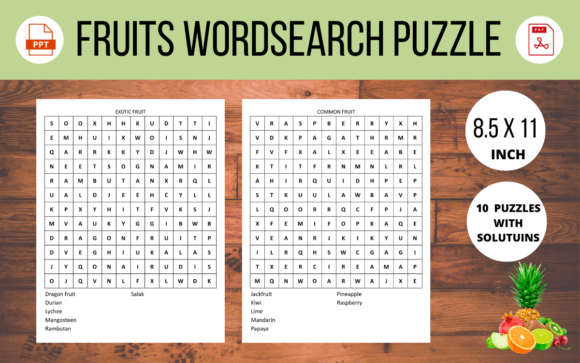
This particular offering centers on a fruit-themed word search collection. The theme itself carries broad demographic reach. Fruits evoke freshness, health, color, and universal familiarity, making the puzzle book suitable for adults, seniors, children, and even classroom settings. The download includes one PDF file pre-configured for Amazon KDP upload and one editable PPT file, giving publishers both speed and creative control. With 60 fruit-related words distributed across puzzles, 23 pages, a trim size of 8.5 x 11 inches, high-resolution 300 DPI artwork, included solutions, and no-bleed formatting, the package addresses the technical requirements that often trip up first-time and experienced KDP sellers alike.
The Strategic Value of Ready-to-Publish Content
Time is the resource most publishers underestimate. Formatting a puzzle book from scratch involves not just generating word lists but also designing grids, ensuring even spacing, verifying that no words repeat unintentionally, typesetting solutions pages, and calibrating everything to KDP's print specifications. The Fruits Wordsearch Puzzle file removes this entire production bottleneck. For a publisher managing multiple titles or testing different niches, the ability to upload a proven, print-ready PDF and go live within hours rather than days or weeks creates a tangible competitive advantage. Speed to market, when combined with thoughtful positioning, allows you to capture seasonal interest, respond to trending themes, or populate a storefront quickly while you focus on higher-effort projects.
Beyond speed, the inclusion of a PPT file opens a layer of strategic flexibility that fixed-format PDFs alone cannot provide. The editable PowerPoint document means you can modify puzzle layouts, change fonts to match a house style, insert branding elements, add introductory pages with your logo or website URL, or adjust the difficulty level by reformatting word lists. This transforms the product from a single-use asset into a customizable foundation that can support multiple variations across different platforms or market segments.
Why Fruit Themes Work Across Audience Segments
Theme selection is not random in successful low-content publishing. Niche themes can limit audience size, while overly broad themes can face saturated competition. The fruit theme occupies a strategic middle ground. It is specific enough to feel curated — someone searching for a "fruit word search book" has clear intent — yet universal enough that it does not exclude casual browsers. Seniors looking for large-print puzzles, parents buying activity books for children, teachers sourcing vocabulary reinforcement materials, and adults seeking relaxing pastimes all intersect with this theme.
The Fruits Wordsearch Puzzle collection, with 60 distinct fruit names, also carries subtle educational value. For younger audiences, it reinforces word recognition and spelling. For older adults, engaging with familiar terms like "pineapple," "mango," and "blueberry" can evoke positive sensory memories while providing the cognitive engagement that word searches are known to support. Publishers who understand these layered use cases can write more precise product descriptions, target more relevant keywords, and position the book in multiple Amazon categories simultaneously — puzzles, activity books, and educational resources.
Understanding the Technical Specifications Before You Upload
Decisions made without understanding print specifications often lead to costly revisions or negative customer reviews. The Fruits Wordsearch Puzzle package addresses several common pain points. The 8.5 x 11 inch trim size is a standard dimension for activity books, which means Amazon's printing process handles it without unexpected cropping or scaling. The 300 DPI resolution ensures that puzzle grids, letters, and any decorative elements print with sharp clarity — an especially important consideration for older readers who may struggle with low-contrast or blurry text in lower-resolution books.
The no-bleed setting simplifies the upload process significantly. Bleed requirements can confuse new publishers, and submitting a no-bleed file when bleed is expected leads to white margins or content running too close to the trim edge. By designing each puzzle as a one-page spread with no bleed, the creator has removed this variable. Each puzzle occupies its own page, which also improves the user experience. Readers do not have to flip pages mid-puzzle, and the generous 23-page count — which includes solution pages for all puzzles — feels substantial without being padded. The solutions are a feature that signals thoughtfulness; many budget puzzle books omit them, frustrating buyers who want to verify answers.
When to Use This Resource in Your Publishing Workflow
The Fruits Wordsearch Puzzle file fits into several strategic moments in a publishing calendar. If you are launching a new KDP storefront and need to establish an initial catalog quickly, uploading this title alongside a few other ready-made puzzle books can give your brand a cohesive look while you develop original content in parallel. If you already have a series of activity books and want to test whether fruit-themed puzzles attract a different buyer segment than your existing titles, this product serves as a low-risk market test. The editable PPT file means you can align the internal design with your existing series look, making the new title feel like a natural extension rather than a one-off purchase.
The resource also suits creators who operate across multiple sales channels. While the PDF is optimized for KDP, the editable format means you could adapt selected puzzles for Etsy printables, Teachers Pay Teachers listings, or even as lead magnets for email list building. A publisher thinking strategically might use one or two puzzles from the collection — reformatted with branding and a call to action — as a free downloadable sample that directs readers toward the full book on Amazon. This kind of multi-channel thinking multiplies the value of a single content purchase.
Positioning and Branding Decisions That Influence Visibility
Uploading the file as-is will get you listed, but intentional positioning determines whether the listing attracts clicks and converts browsers into buyers. Consider the title structure, subtitle, and description carefully. The fact that this is a fruit-themed word search book is fixed, but how you frame it shapes perception. One publisher might position it as a relaxing activity book for seniors, emphasizing large grids and familiar words. Another might market it toward parents of elementary-age children, highlighting vocabulary building and screen-free entertainment. A third could target health-conscious adults who enjoy wellness-themed activity books. Each positioning choice changes which keywords you target, which categories you select, and how you write the product description.
The Fruits Wordsearch Puzzle content itself remains the same in all cases, which illustrates an important principle: the asset is neutral; the strategy is yours. The PPT file enables you to add a subtitle page, an "About This Book" section that speaks directly to your chosen audience, or even a brief nutritional fact or fruit trivia on each solution page. Small additions like these transform a generic puzzle book into a branded experience that readers are more likely to remember, review positively, and purchase again when you release similar titles.
Practical Planning Tips for Launching a Puzzle Book
Before uploading, spend time on category research. Amazon's category structure for puzzle books includes subcategories for word search books, activity books for adults, and educational games. Placing your title in the most specific, least competitive category that matches your positioning increases visibility. The Fruits Wordsearch Puzzle fits several paths, and your choice should align with the audience you plan to target in your description and cover design — which, notably, is the one element you will need to create or source separately, as the product focuses on internal content.
Review the solution pages thoroughly. Even ready-made files benefit from a second look. Verify that word lists match the grids and that no formatting shifts occurred during file transfers. This is not a reflection on the product quality but rather a sensible step in any publishing workflow. A single mismatch between a puzzle and its answer key can generate negative reviews that damage a listing's momentum. The 23-page count suggests a manageable number of puzzles to check, making this quality assurance step efficient.
Customization Pathways Using the Editable PPT File
The PowerPoint file is the strategic differentiator in this download package. Consider using it to create distinct versions of the same core content. For example, you might produce a standard version, a large-print version with increased font size and single puzzles per landscape page, and a digital-friendly version formatted for tablet use. Each variant targets a different customer segment while leveraging the same underlying word lists and puzzle structures.
You might also add value through supplementary content. A "Fruit Facts" section between puzzles, a brief introduction explaining the cognitive benefits of word searches, or a progress tracker where users can note completed puzzles all enhance perceived value. These additions require minimal effort within PowerPoint but can meaningfully influence a buyer's decision between your book and a competing title. The key is ensuring that any additions serve the reader's experience rather than padding the page count.
What to Consider Before Relying Solely on Ready-Made Content
Ready-to-publish files solve real problems, but they also carry inherent limitations that strategic publishers account for. The Fruits Wordsearch Puzzle product is non-exclusive content; other publishers may purchase and list the same internal file. This is not inherently disqualifying — many successful KDP sellers build income streams using non-exclusive content — but it means that your competitive edge must come from factors beyond the puzzle grids themselves. Cover design, title positioning, description copy, pricing strategy, review generation, and advertising decisions become the differentiators when interior content overlaps across listings.
A risk emerges when publishers treat ready-made content as a set-and-forget asset. Without category optimization, keyword research, and periodic review of competing titles, even a well-formatted puzzle book can sink into obscurity. The product is a functional tool; results depend on the strategic framework into which you place it. Publishers who understand this distinction use ready-made files to accelerate their output while investing the saved time into marketing, brand building, and audience research — activities that compound in value across multiple titles.
Long-Term Value Beyond a Single Listing
The Fruits Wordsearch Puzzle package also holds value as a learning resource. For someone new to KDP publishing, examining a professionally formatted, print-ready file reveals conventions around margin sizes, font choices, solution placement, and page numbering that are transferable to original puzzle books. The editable PPT file, in particular, can serve as a template for future projects once you understand how the elements are arranged. In this sense, the purchase functions as both an immediate publishing asset and a professional development tool.
For educators and freelancers, the editable format enables adaptation for classroom use. A teacher might extract individual puzzles for vocabulary lessons, create themed activity packets for early finishers, or design homework sheets that reinforce spelling through puzzle-solving. The fruit theme aligns with nutrition units, ESL vocabulary building, and even science lessons about plant-based foods. A single purchase that serves both publishing and teaching goals represents efficient resource allocation — something that appeals to the practical, outcomes-focused professional.
Making an Intentional Decision About This Resource
Before acquiring any ready-to-publish content, clarify your primary goal. Are you building a broad catalog fast to test which niches convert? Are you filling a specific gap in an existing product line? Are you exploring KDP as a side income stream and need a low-barrier starting point? The Fruits Wordsearch Puzzle file aligns well with all three scenarios, but how you use it will differ. A catalog builder might upload it immediately with minimal customization. A brand-builder might spend additional time on presentation and audience alignment. A beginner might use it to learn the upload process while producing a viable first title. Each approach is valid, provided it matches the intended outcome.
The product's specifications — PDF and PPT files, 60 words, 8.5 x 11 inches, 300 DPI, 23 pages, solutions included, no bleed, one puzzle per page — represent a set of decisions already made on your behalf. This reduces your cognitive load on production details and frees you to think about the higher-level questions: Who is this book for? How will they find it? What experience will they have when they open it? Answering these questions thoughtfully turns a ready-made file into a genuine publishing asset.
Activity books continue to perform because they meet enduring reader needs: relaxation, mental engagement, and the satisfaction of completion. The Fruits Wordsearch Puzzle taps into these fundamentals with a theme that crosses age and interest boundaries. When deployed with clarity of purpose and attention to positioning, it can serve as more than a single product — it can become a building block in a larger content strategy that rewards thoughtful execution over time.