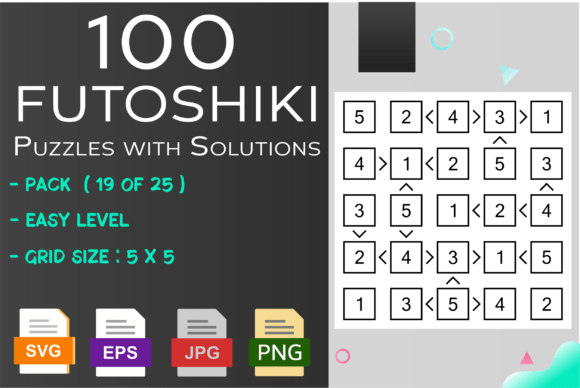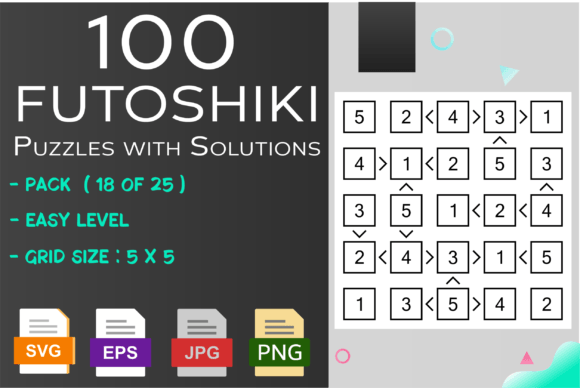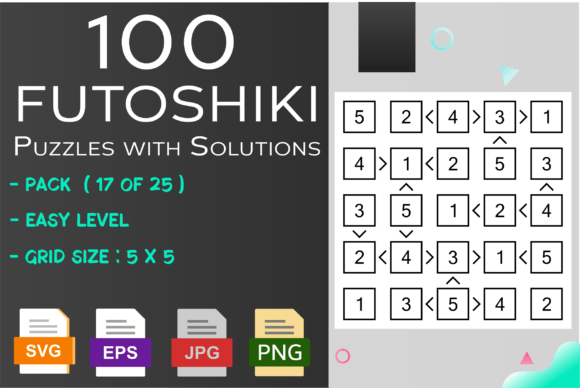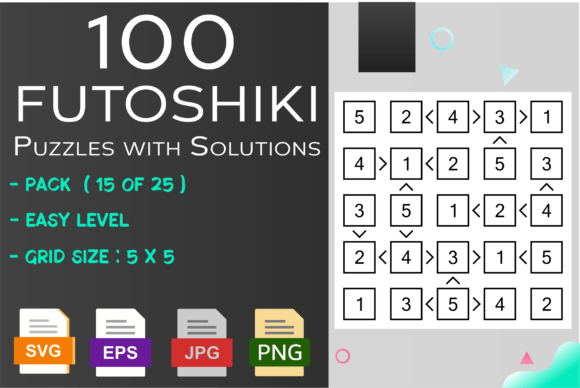
100 Futoshiki Puzzles: Easy 7 of 25 – A Quiet Brain Workout That Fits in Any Pocket
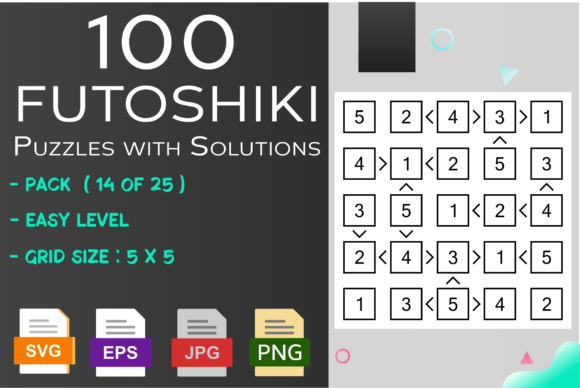
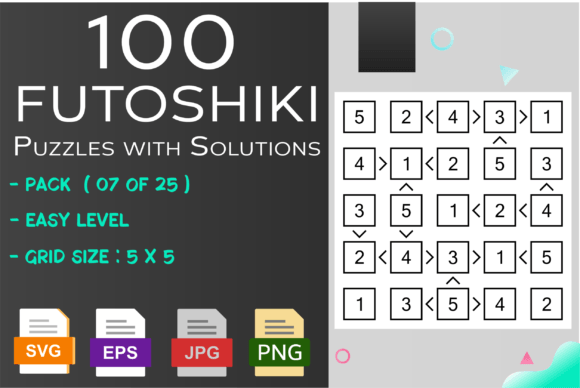
There’s a particular satisfaction that comes from penciling in the final digit on a logic grid. No frantic typing, no flashing notifications—just a pencil, a printout, and a puzzle that lets your mind settle into a gentle rhythm. The 100 Futoshiki Puzzles Easy 7 of 25 collection captures exactly that feeling. As the seventh instalment in what will eventually be a 25-volume easy puzzle line, this set delivers 100 handcrafted 5×5 Futoshiki grids, each with its own solution, wrapped in a bundle that’s ready for everything from a quiet Sunday morning to a full-blown KDP publishing project.
If you’ve never held a Futoshiki puzzle before, imagine Sudoku’s younger, more logical sibling. Instead of 3×3 boxes, you get a grid littered with “greater than” and “less than” signs. The rules are wonderfully simple: place the numbers 1 through 5 in each row and column exactly once, while respecting those little inequality arrows. The grids here stay intentionally small and the logic stays straightforward, which makes this volume an inviting entry point even if the word “Futoshiki” has never crossed your lips before.
When an Easy Puzzle Becomes a Daily Anchor
People often underestimate the power of an easy puzzle. The word “easy” can sound like a compromise, as if you’re skipping the real mental workout. But in practice, easy Futoshiki puzzles function more like a mental anchor. They provide a predictable structure for a mind that’s been bouncing between spreadsheets, family logistics, and never-ending email threads. Spending ten minutes with a 5×5 grid after lunch can reset your focus far better than scrolling social media ever could. The predictable comfort of a puzzle where you know a solution exists—without needing to wrestle with esoteric chains of logic—lets your brain coast into a flow state that energizes without exhausting.
That gentle accessibility also makes the collection a subtle tool for parents who want to invite their kids into logical thinking without any hint of a classroom drill. Because the grids are only 5×5 and the logic is never punishing, a curious 9-year-old can work side-by-side with an adult, both moving at their own pace. The inequality symbols become a shared visual language. Before long, you’re discussing why a certain number can’t go in a certain cell, and the conversation drifts naturally into reasoning, patience, and the quiet thrill of deduction.
A Publisher’s Quiet Asset: 100 Ready-to-Use Puzzles
If you publish puzzle books through Amazon KDP or sell printable activity sheets on platforms like Etsy, you know the creative tangle that comes with content creation. Designing original puzzles from scratch, verifying them, and then formatting them for print can eat up days that you’d rather spend on cover design or marketing. The 100 Futoshiki Puzzles Easy 7 of 25 shifts that balance back in your favour. The file bundle arrives with four formats: EPS, PNG, JPG, and SVG. That alone sidesteps the compatibility headaches that often plague KDP interiors. You can drop the SVG straight into Adobe Illustrator if you want to tweak line weights, or use the PNGs for a quick and dirty digital booklet. The EPS files preserve vector quality for crisp printing at any size, which matters when you’re selling a paperback and buyers flip through and notice pixelated lines—or don’t, because you chose vectors.
Beyond formats, the sheer volume of 100 puzzles with solutions means you’re not hunting for content piecemeal. You could build an entire paperback puzzle book with just this one download: a title page, a quick how-to-play guide, the puzzles, and the solutions at the back. Or you could use thirty of the grids as a bonus chapter in a larger mixed-puzzle collection. Some KDP creators curate themed books—maybe “Summer Brain Games” or “Mindful Mondays”—and having a reliable stash of logic puzzles that don’t look intimidating on the page helps round out the variety without scaring off casual buyers.
Creative Customisation Without Reinventing the Wheel
Because the puzzles are provided as editable vector files, you’re never locked into a look that doesn’t match your brand. Want to recolor the grid lines to match a seaside pastel palette? Done. Prefer a minimalist black-and-white workbook vibe? The JPGs handle that straight out of the zip. Some publishers add tiny illustrated animal icons beside each puzzle for a kids’ activity book; others layer the grid over a subtle watercolor texture. The puzzle logic itself stays untouched—no need to recalculate solutions—but the visual presentation becomes entirely yours. That blend of done-for-you mathematical integrity and open-ended design flexibility is what makes collections like these feel like a genuine creative partner rather than a static product.
Even if you never sell a single copy, re-styling a puzzle page for a family reunion activity booklet or a corporate wellness newsletter becomes a quick afternoon project instead of a logistical puzzle in itself.
Why the 5×5 Grid Works Across So Many Contexts
The 5×5 size is the unsung hero of this collection. It’s small enough to print eight puzzles on a double-sided A4 sheet without requiring a magnifying glass, yet large enough that each puzzle demands a few minutes of sustained thought. This makes the volume wildly adaptable. An aged-care coordinator might print a few sheets for a morning tea gathering where participants appreciate puzzles that don’t insult their intelligence but also don’t ask for an hour of silent concentration. A university library could leave a stack of printed grids next to the stressful exam-prep area as a gentle stress-buster. A software developer working on a logic-heavy project might pin one beside their monitor as a warm-up before tackling a complex algorithm—like a singer doing scales before a performance. The format simply fits.
Because the puzzles are all “easy,” they rarely trigger that mid-puzzle frustration that makes people shove a book back onto the shelf. The satisfaction-to-effort ratio stays high, which is exactly what you want in a product designed to be consumed repeatedly, whether by paying customers or by your own family.
What to Consider Before You Download
Transparency matters. This collection is, as the title announces, the seventh of twenty-five easy volumes. If you’re looking for a single download that covers every difficulty tier from gentle to brutal, this isn’t it. You’re getting consistent, reliable easy puzzles, not a progressive difficulty curve. That’s a strength for people who want predictability, but it’s a limitation if you need a mixed-difficulty book in one zip file. Thankfully, the series approach means you can intentionally pair this with a medium or hard volume later, offering your audience a logical progression without gambling on inconsistent puzzle quality.
Also, while the 100 puzzles are substantial, consider page count. In a KDP book, 100 puzzles plus solutions can easily stretch to 120 pages or more depending on your layout. That puts the book comfortably in the 6×9-inch sweet spot, but if you’re aiming for a slimmer, lower-priced product, you might want to split the puzzles into two or three smaller books. The file flexibility supports that decision because you can export exactly the pages you need.
The Underrated Role of Solutions
Solutions in a puzzle product aren’t just a courtesy; they’re a quiet trust signal. A buyer scanning the Look Inside feature on Amazon will often flip straight to the solution pages. Crisp, clearly laid-out answers tell them the puzzles were constructed with care, not generated by a black-box algorithm that might have spat out broken grids. The solution set in this bundle gives you that credibility right away. For self-solving enthusiasts, having the key means you can gently nudge yourself without fully giving up—a peek at the first row can reignite your logic without spoiling the entire grid. That psychological nudge keeps engagement high and frustration low.
Where Simplicity Meets Long-Term Appeal
We live in a world that constantly pushes toward more: more levels, more complexity, more stimulation. There’s something quietly radical about choosing a collection of 100 easy puzzles and letting that be enough. The 100 Futoshiki Puzzles Easy 7 of 25 isn’t trying to be the most bewildering logic test on the shelf. It’s aiming to be the one you actually finish—page after page, coffee after coffee—and maybe even pass along to someone else when you’re done. That shelf life, combined with the KDP-ready formats that let you reshape the puzzles into your own product line, makes the collection far more than a stack of digital files. It’s a flexible, print-friendly, brain-friendly resource that slides just as easily into a commercial publishing workflow as it does into a quiet corner of your Saturday morning.