Editable Bible Devotional Planner KDP & Canva
Faith-based journals and devotionals continue to grow as top sellers in the low-content book space, yet many creators get stuck trying to design pages from scratch. The Editable Bible Devotional Planner KDP template flips that script. Instead of wrestling with margins, prompts, and layout decisions, you open a pre-structured, beautifully balanced planner inside Canva — and start personalizing it within minutes. The entire template packs dozens of carefully planned sections, covering everything from daily prayer lists to in-depth scripture studies, gratitude exercises, and yearly goal trackers.
Visually, this planner feels calm and intentional. Soft dividers, gentle line spacing, and a restrained color palette create an atmosphere of stillness. There’s no visual clutter competing for attention; each page uses clear headings and just enough breathing room so the hand-lettering or writing inside feels cherished. The overall personality leans quietly elegant, with a touch of organic warmth — something that works equally well for a women’s small group guide, a personal sabbath journal, or a printed Amazon KDP bestseller.
What’s Inside the Template
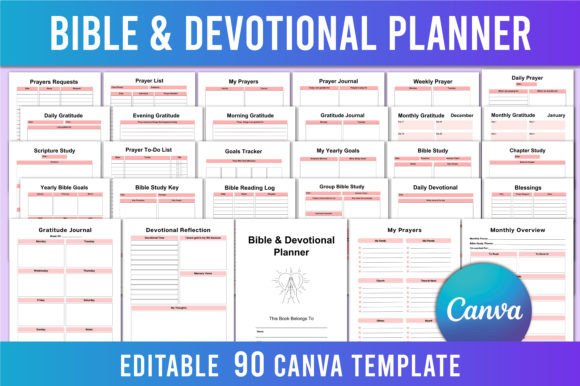
This isn’t a slim booklet with a few repeating pages. The journal specifications list reveals an unusually rich collection of spreads, which means you can build an entire devotional system — or pick and choose the sections that fit your audience best. It begins with a dedicated “Belongs To” page, a prayer journal landing section, and then unfolds into multiple categories:
- Prayer & Requests: My Prayers, Prayer List, Prayer Requests, Daily Prayer, Weekly Prayer
- Gratitude Practice: Morning Gratitude, Evening Gratitude, Daily Gratitude, Monthly Gratitude (January through December)
- Affirmations & Reflection: My 10 Affirmations, Gratitude Journal, God’s Faithfulness, Devotional Reflection, Verse Analysis
- Scripture Study: Chapter Study, Bible Study, Bible Study Group, Bible Reading Log, Bible Study Key, Chapter Observations, In Depth Bible Study (Interpretation, Application, Context), Memory Verses, The Word Of God devotional page
- Goals & Planning: My Yearly Goals, Yearly Bible Goals, Prayer To-Do List, Goals Tracker (2 pages per), My Amazing Week, Monthly Overview
- Creative & Personal Pages: Sermon Notes, Praise and Thanksgiving, Reflections, Life Reflections, Doodles and Artwork, Act of Kindness, My Prayer Notes, Small Things, Blessings, and two unique Bible Study Notes pages
Every spread is delivered in a clean 8.5×11 inch format, ready for high-resolution printing. You receive a print-ready PDF, plus JPG and PNG files — perfect for those who want to drop selected pages into other projects, preview them on tablets, or create digital devotionals.
Design Personality and Visual Consistency
The planner doesn’t feel mass-produced because the visual language stays cohesive from cover to interior. Typography plays a subtle but critical role: headings use a gentle, slightly condensed sans serif or softly rounded serif that reads effortlessly, while body sections rely on a clean, handwritten or light script style for a personal journal feel. This pairing creates a visual hierarchy that guides the eye naturally — major section titles anchor the page, and secondary prompts invite the user to pause and reflect.
Color accents are intentionally minimal, usually soft ink tones, watercolor washes, or line-art botanical motifs. Because everything is editable in Canva, you can easily shift those accents to match a personal brand palette, a church’s visual identity, or a seasonal product line (think muted lavender for a women’s spring journal or deep olive for a men’s discipleship planner). Layouts follow predictable grids: the two-page goal trackers use glanceable tables, while journaling pages leave generous unlined space. This consistency helps reduce cognitive load for the end user — they instinctively know where to write, what to expect, and how to move through their week.
Where This Planner Works Best
The obvious home is Amazon KDP. Low-content and medium-content publishers can upload the customized PDF directly, set a competitive price, and have a professional devotional journal live within days. The template’s page variety also makes it ideal for Etsy printable shops: sellers can crop individual page types into bundled sets — such as a “30-Day Gratitude & Prayer Pack” or an “In-Depth Bible Study Workbook” — offering multiple products from a single investment.
Beyond marketplaces, churches and ministry leaders use these editable pages for retreat handouts, small group curriculum, or personal discipleship tools. Designers working with Christian brands or non-profits can adapt the interior pages to create branded leave-behinds at events. Even a solo entrepreneur building a personal brand around faith and wellness might turn selected sections into a lead magnet for an email list. Because the template is fully editable, it’s not locked into a single look — a few hue shifts, a different header font, and the same structure serves a teenage audience, a men’s accountability group, a mother’s fellowship, or an intergenerational Bible class.
How Layout Influences Engagement and Usability
A devotional planner’s power lies in daily adherence. The Editable Bible Devotional Planner KDP design encourages exactly that by balancing structure and freedom. Pages like “Daily Prayer” include delineated fields for gratitude, concerns, and scripture reflection, which shortens the blank-page paralysis many journalers face. At the same time, wider spaces for “Reflections” or “Life Reflections” allow deeper processing, so the planner ages into a meaningful keepsake, not a rote checklist.
From a publishing standpoint, that same layout creates a strong market differentiator. A book preview that shows varied, thoughtfully spaced interiors signals value and craftsmanship. It tells the customer the journey inside will be organized yet personal — a combination that justifies a higher price point and reduces returns. The 8.5×11 format further boosts perceived value: it’s large enough to feel substantial on a nightstand, yet standard enough for affordable print-on-demand production.
Practical Guidance for Customization and Commercial Use
Since all editing happens in Canva, the learning curve stays shallow. There’s no need to navigate advanced desktop publishing software. You can replace the placeholder text, adjust font pairings, and upload your own cover design or branding elements in one interface. If you’re targeting a specific niche — say, devotionals for military spouses, prayers for new mothers, or teen Bible study — small changes in color temperature, iconography, or even the addition of a simple pattern on dividers will instantly shift the tone.
Before uploading to KDP, do a test print; check that margins respect the binding edge and that any dark background accents don’t cause show-through. Many experienced publishers will create a “look inside” version that only includes the first 30 pages, deliberately showcasing the most distinct spreads. This approach entices the customer while protecting the full product.
Licensing is another crucial piece. Since the template is offered for commercial use, you can sell the final formatted journals on Amazon and other platforms without paying ongoing royalties. That said, always review the specific terms from the template creator to confirm you cannot resell the editable template itself — only the finished, printed or flat PDF book. This distinction keeps your business compliant and lets you scale confidently.
Pairing the Planner with Other Design Assets
The template’s neutral base acts like a framework ready to blend with other creative resources. Pair the interior pages with a custom cover designed using a graceful script font for the title and a clean serif for the subtitle to convey trust and heritage. For social media graphics promoting the journal, reuse a few interior previews alongside a handwritten style “Prayer List” overlay. This visual continuity — from product imagery to the actual book pages — builds brand identity that readers start to recognize, whether they first encountered you on Amazon, Instagram, or Pinterest.
If you’re building a product line around the same audience, consider expanding outward. The daily prayer and gratitude sections can morph into a separate stand-alone gratitude journal. The in-depth Bible study pages can be collected into a sermon notes workbook. You’re not just buying a planner; you’re acquiring a modular design system that can feed multiple income streams with minimal redesign work.
Real-World Applications and Observations
One creator used the Editable Bible Devotional Planner KDP to build a quarterly devotional for women recovering from burnout. She swapped the default color palette for soft sage and cream, added a short weekly reflection prompt based on scripture, and kept the “Morning Gratitude” and “Evening Gratitude” pages exactly as designed. Within eight weeks, the journal reached a steady rank in Christian devotionals on Amazon. Her customers frequently commented on the guided yet open-ended layout — a direct result of the template’s original configuration.
A small church group leader downloaded the Canva link, selected only the prayer list, prayer requests, and sermon notes pages, customized the header font to match the church’s website, and printed spiral-bound copies for 50 members. The cohesive look made the materials feel intentional, even though the entire process took an afternoon. That’s the real value: the design work stays behind the scenes, letting you focus on the message and the community you serve.
Whether your next project is a static printable for Etsy, a full-length softcover devotional on KDP, or a reusable digital journal for a tablet crowd, this template removes the heavy lifting. It hands you a complete, thoughtful structure, and the easiest tools to make it unmistakably yours.